

The New Arsenal: Sensors, Autonomy, Energy
Warfare is evolving fast. It’s no longer just about missiles and firepower. Today, the most powerful weapons are the ones that can see, survive, and adapt.
The new arsenal is built around flexible, affordable, and rapidly deployable systems designed to evolve – systems not tied to the threats of the past, but ready for the conflicts of tomorrow. Think sensors, autonomy, and electromagnetic energy: technologies that give forces the edge to sense first, decide faster, and operate smarter in any environment. They deliver superior situational awareness by detecting, tracking, and understanding everything transmitting in the modern battlespace.
And in that shift, energy – specifically electromagnetic signals – is becoming the new gunpowder. As autonomous systems grow in number and adversaries invest in ways to jam or spoof wireless signals, controlling the invisible spectrum of radio frequencies has become a must-have for modern militaries.
This shift raises a critical question: If our future strategy depends on drones and autonomy, how do we ensure those systems can truly understand their environment, evade threats, and still complete the mission?
Attritable Platforms and the New Economics of Warfare
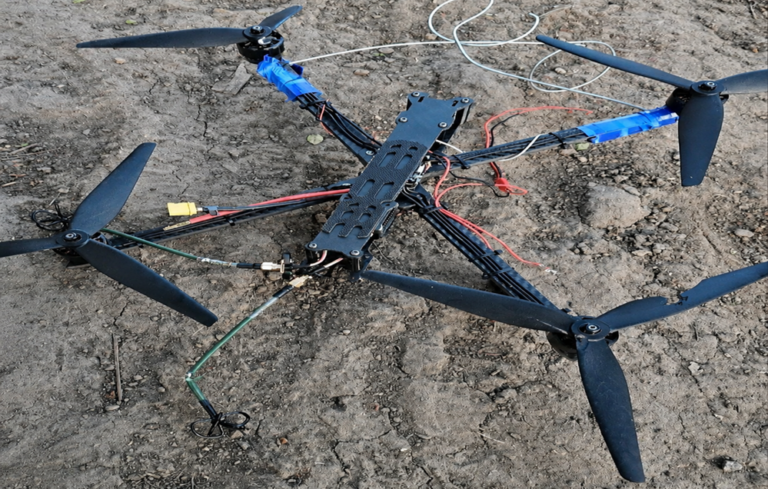
Meet the attritable platform: low-cost, unmanned systems built for one-way or limited missions. These aren’t high-end, recover-at-all-costs drones – they’re designed to be deployed in volume, to go deep, and often not return. We’ve already seen their strategic and lethal impact play out in Ukraine, Russia, Israel, and Iran – and their use is accelerating by the day. Now, the U.S. is racing to scale similar capabilities, with major initiatives underway to build, test, and field attritable systems at speed and at scale.
But for these systems, low-cost doesn’t mean low-performance. To be effective, they need to make smart decisions in real time -like detecting hostile drones or jammers, navigating through electronic warfare zones, and staying connected to their operators and teammates. Achieving that requires more than just autonomy. It demands continuous awareness of the radio frequency (RF) environment, because that’s where most modern threats, and communications, live.
This is where traditional RF sensing systems fall short. They’re often too bulky, power-hungry, or expensive for use on small, disposable platforms. Worse, many rely on fixed libraries of specific, known transmission protocols which limits their ability to detect unfamiliar or evolving threats. In a battlespace defined by rapid innovation and improvised attacks, that’s a critical weakness. What’s needed is a new approach to RF sensing: one that’s lightweight, low-cost, and built to detect the unknown – not just recognize the familiar.
In short: they need full-spectrum awareness. That means the ability to detect and respond to threats across the entire electromagnetic spectrum, not just survive, but succeed, even when they’re meant to be expendable.
ODIN: Seeing the Unseen
Providing that kind of agile, full-spectrum awareness, without emissions, bulk, or preloaded assumptions – is exactly what ODIN was built to do.
Developed by R2 Wireless, ODIN is a compact, lightweight, and fully passive RF sensor that gives autonomous systems the power to “see” the invisible – continuously scanning the electromagnetic environment to detect, classify, and track any signal of interest. And because it doesn’t emit, it stays silent and undetectable – maintaining the low signature that attritable platforms require. ODIN gives drones and other systems the critical edge they need: real-time, full-spectrum awareness without compromising their mission.
Here’s how it works: ODIN passively listens across the entire RF spectrum. It detects signals, classifies them – whether it’s a drone, a jammer, a phone, a radio, or something more dangerous – pinpoints their origin, and tracks them in real time. It operates completely silently, never transmitting, which means it remains undetectable even in contested environments. And it keeps working even when adversaries are using encrypted communications, frequency hopping, or GPS jamming and spoofing.
ODIN was designed for the realities of today’s missions and the demands of tomorrow’s. It runs on commercial off-the-shelf (COTS) hardware, making it highly affordable, easy to scale, and quick to deploy. Its ultra-low Size, Weight, and Power (SWaP) footprint means it can be mounted anywhere – on drones, vehicles, ships, or wearable systems – without disrupting the host platform. And with an open architecture and standards-based API, ODIN integrates seamlessly into any command-and-control (C2) platform, giving operators a plug-and-play tool for spectrum awareness across any mission set.
This is what “RF anomaly detection” looks like in action. ODIN doesn’t just wait for threats to appear – it hunts for unusual or suspicious signals and flags them fast. That kind of insight is critical for operating in contested zones where the spectrum is crowded, confused, and often hostile.
The Path to Drone Dominance Runs Through RF
The future of warfare hinges not just on speed and lethality, but on awareness, survivability, and intelligent adaptability, especially for autonomous and attritable platforms operating deep in contested environments.
The U.S. government has made clear that drone dominance is a top national security priority. Recent initiatives led by the President and Secretary of War aim to fast-track the innovation and production of autonomous systems to ensure U.S. technological superiority.
But drone dominance isn’t just about building better drones. Just like air dominance isn’t only about airplanes – it’s about total control and awareness of the battlespace – achieving drone dominance means first securing the electromagnetic high ground.
As the electromagnetic spectrum becomes the new front line, ODIN is redefining what’s possible with complete RF dominance that provides drones, autonomous systems, and warfighters with the intelligence edge required to survive, adapt, and strike – enabling them to detect threats before being detected, communicate securely, and operate freely in environments saturated with electronic interference. Without spectrum dominance, autonomy becomes a liability rather than an advantage.
Mission-critical capabilities no longer need to be expensive or permanent. They need to be smart, scalable, and mission-ready.
In this battlespace, awareness is armor, and ODIN makes it scalable.