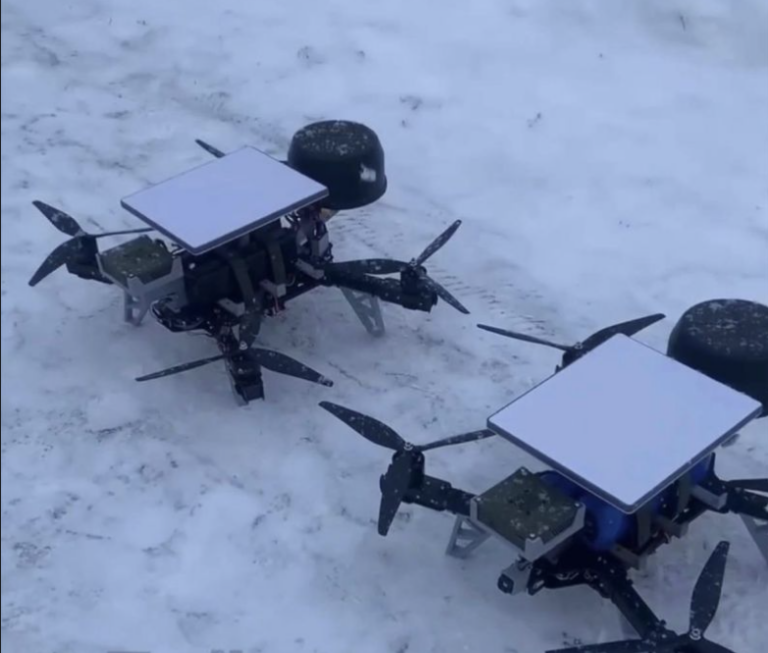

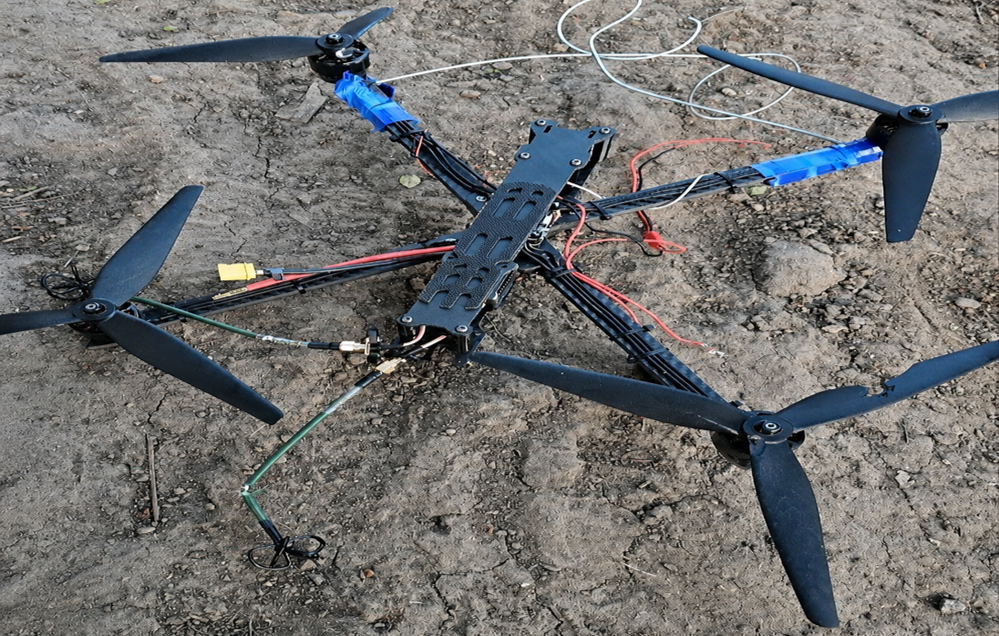
Lately, there seems to be an obsession around countering fiber-optic drones, especially in the Middle East.
Let’s be clear: fiber-optic drones are a significant threat. But they are not the story. They are simply the latest chapter in a much bigger one.
Drone warfare is the fastest-evolving domain in modern conflict. The technology is advancing at a pace unlike anything we’ve seen before. If your strategy is to react to today’s “king,” you’re trapped in an endless cat & mouse game, constantly preparing yourself for yesterday’s war.
Fiber-optic drones emerged as a response to sophisticated electronic warfare. Because their communications are carried through fiber rather than RF links, they are significantly harder to detect and disrupt using traditional electronic warfare tools.
But they also have limitations. The spool adds cost and weight, and it constrains range and manoeuvrability.
Now we’re already seeing the next evolution: drones combining the advantages of multiple approaches, using highly optimized RF links where telemetry and video are blended into a single frequency-hopping transmission that is increasingly difficult to distinguish from background noise and interferences.
The lesson is simple: the threat keeps adapting. Today’s breakthrough is tomorrow’s vulnerability, and tomorrow’s vulnerability is the seed of the next innovation.
Countering drone warfare requires more than a single sensor, jammer, interceptor, or detection method. It requires an adaptable, multi-layered architecture combining sensor fusion, early warning, real-time geolocation and tracking of new signals, soft- and hard-kill capabilities, physical protection measures, and constantly evolving tactics.
Is Fiber Optics dead? Is there a new “King”?
Maybe. At least for this month….
R2’s ODIN platform is the silent sensing layer that powers survivability, targeting and spectrum awareness.
Battle-proven. Future-proof.